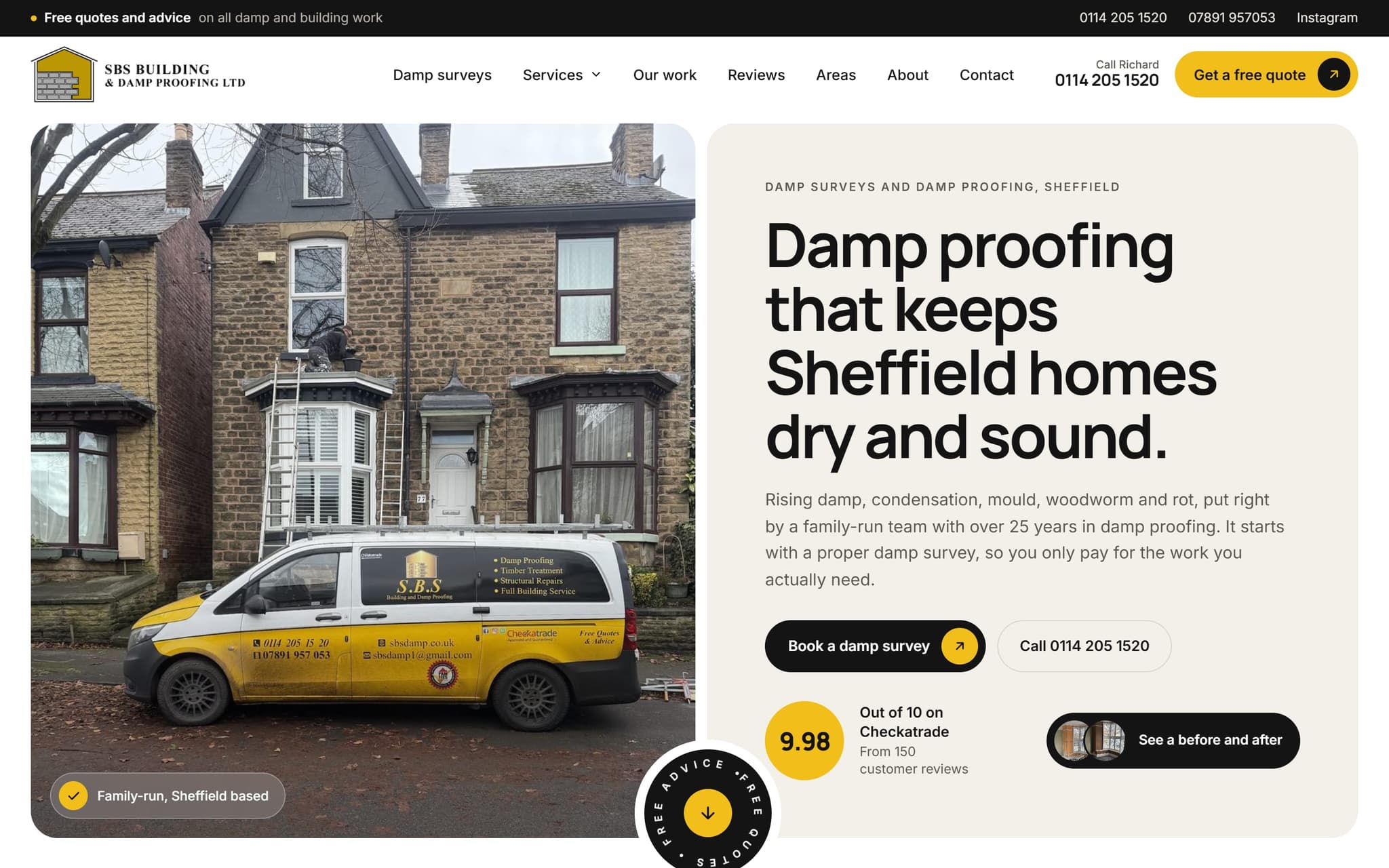
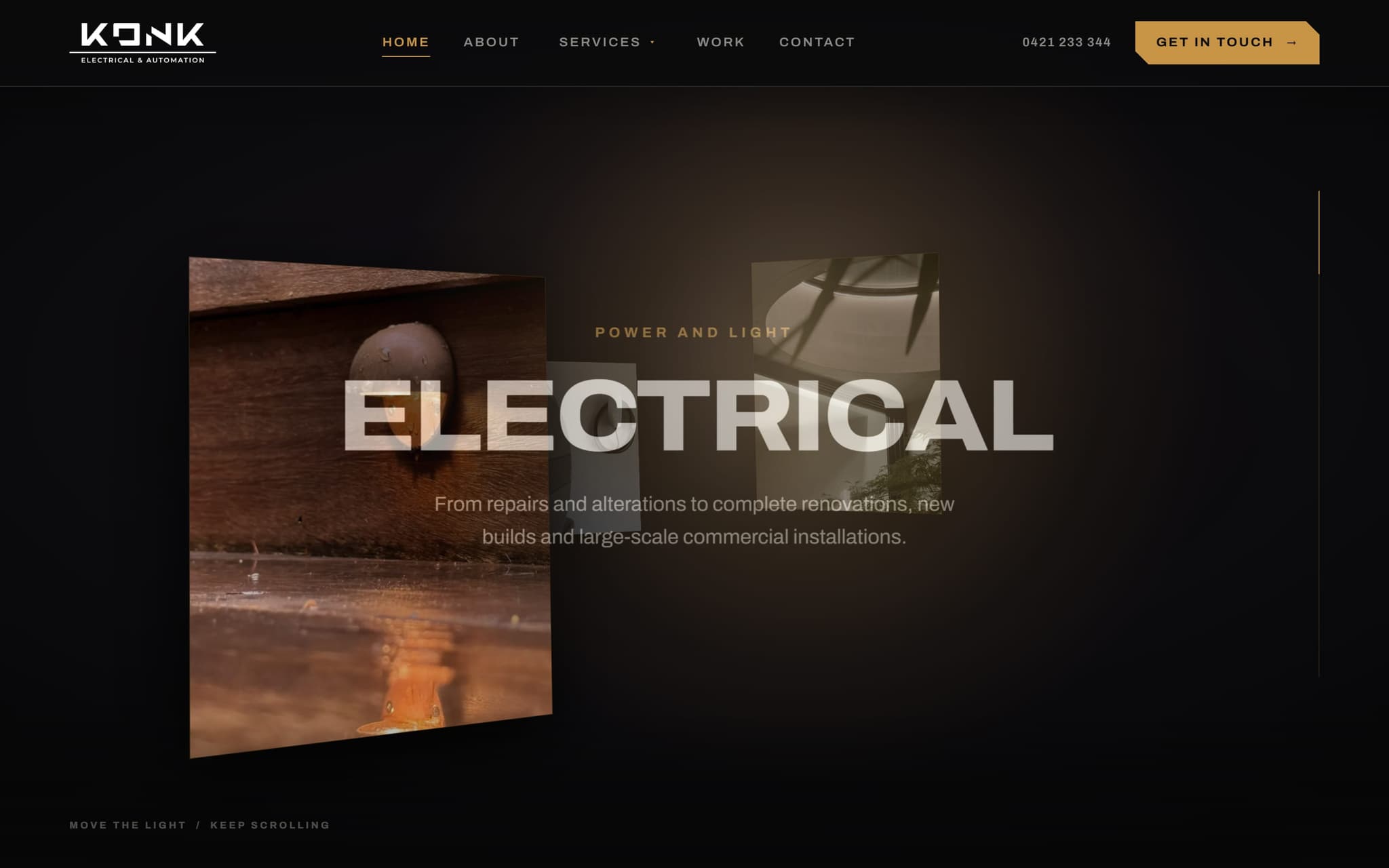
Built for the client you want.
A homeowner planning an extension and a QS checking your credentials want different things. We build the site around the clients you're chasing, not a generic trade template.

Websites for builders, contractors and trades that show your best projects properly, get you found for the jobs you want and turn visitors into quote requests. Built by a Sheffield studio, for construction firms anywhere in the UK.
AW Media designs and builds websites for construction companies: builders, main contractors, specialist subcontractors and trades. We're a web design studio in Sheffield, building since 2016, and we've built for construction firms, heating engineers, industrial contractors, tile suppliers and EV installers across the UK.
Most construction websites fall into one of two traps. Stock photos of hard hats that could be anyone, or a gallery of phone photos with no story behind them. Neither tells a homeowner, an architect or a main contractor why they should pick you. A good construction website does: what you build, where, for whom, to what standard, and how to get a price.
Every site we build is custom, never a template. You get project pages that read like proof, service pages for the work you want more of, area pages for where you actually work, and a quote form that sorts the real jobs from the time-wasters. All of it built so Google and AI search tools can read it properly.
Each job gets its own page: the brief, the scope, the location, the photos and the result. Proof a client can read in a minute, not a dump of photos.
Extensions, loft conversions, groundworks, roofing, refurbishments, fit-outs. A page for each, so you get found for the profitable jobs, not just your company name.
Pages for the towns you really cover, each written for that area, so people searching nearby find you without thin copy-and-paste pages.
Domestic or commercial, type of work, postcode, budget and timeline, asked up front. Plus one tap to call, or to WhatsApp a photo of the job.
CHAS, Constructionline, TrustMark, Gas Safe, NICEIC, insurance and policies, all easy to find. A capability statement main contractors can download.
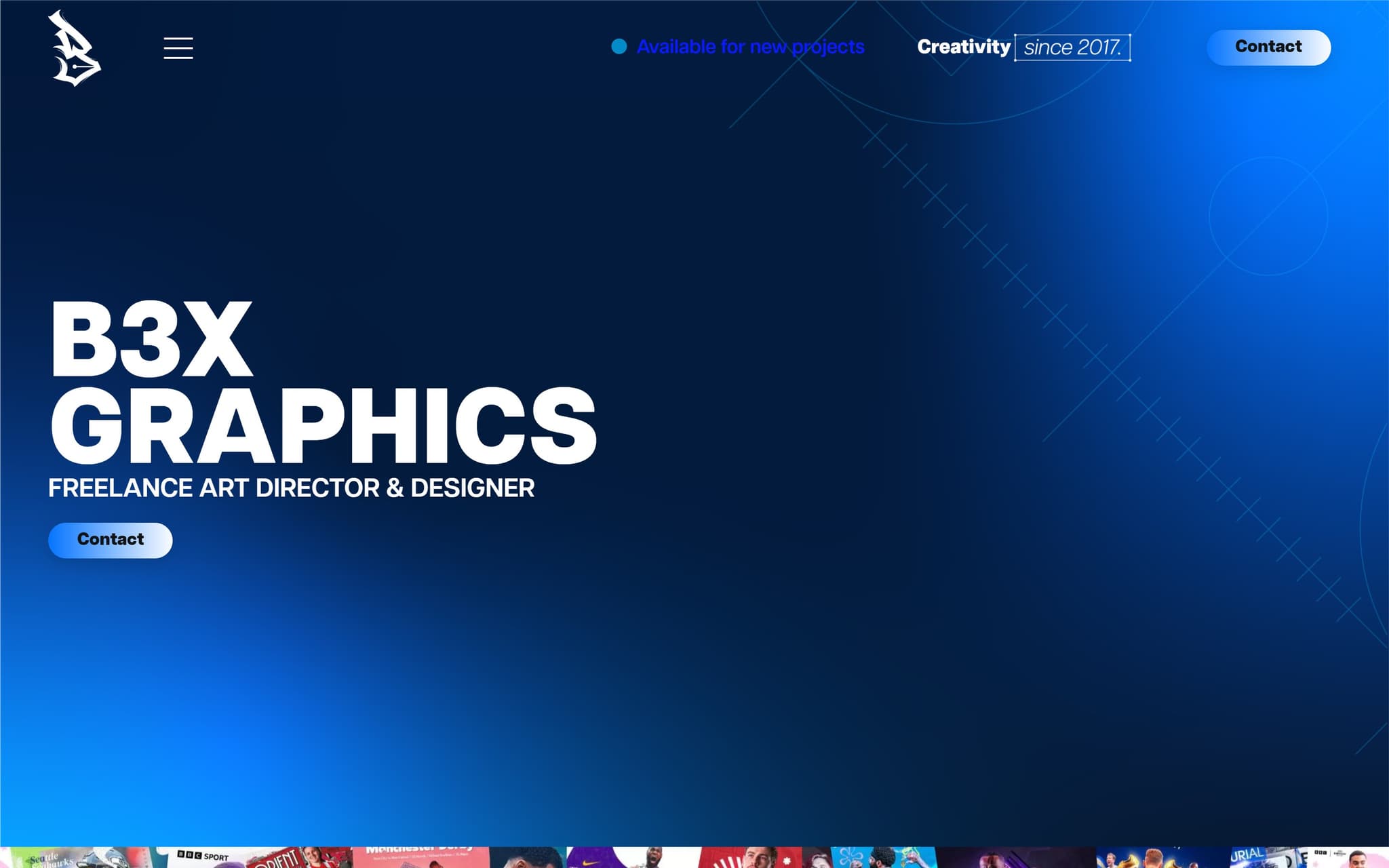
Logos, van livery, signage and workwear designs with print-ready files, so the site, the vans and the hoardings all look like one company.
A homeowner planning an extension and a QS checking your credentials want different things. We build the site around the clients you're chasing, not a generic trade template.
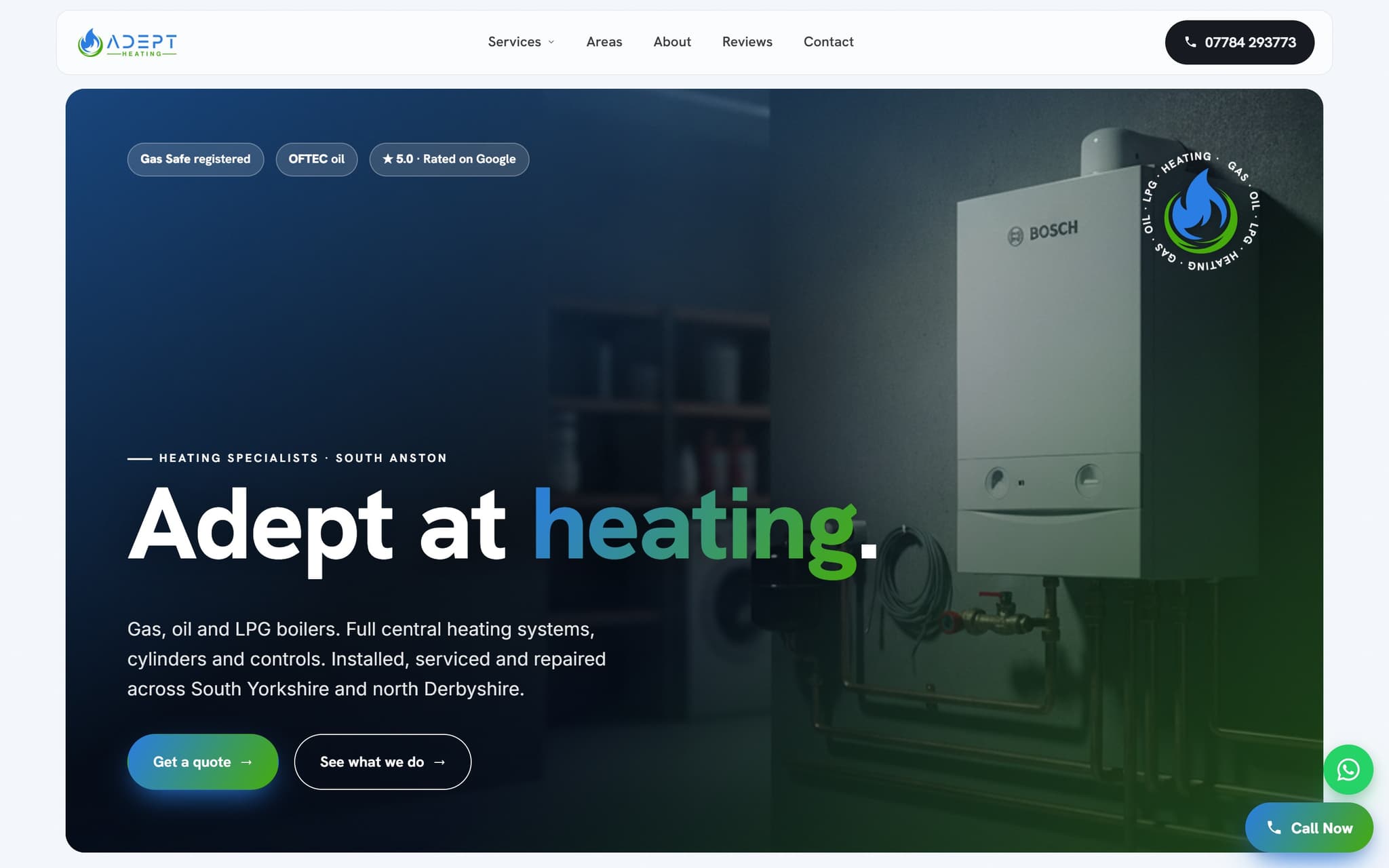
Fast pages, proper schema, a sitemap and an llms.txt file, so search engines and AI assistants understand exactly what you do and where. It's how we built Adept Heating's 34-page site.
We're a small team in Sheffield. You talk to the people building your site, and after launch changes get made quickly by people who already know it.
Straight answers to what builders and contractors ask us before they start, and to what their own customers look for before they ring.
Start with what a client checks before they pick up the phone. Who you are, what you build, where you work, proof you've done it before, and whether you're properly accredited and insured. If any of that is missing or hard to find, they ring the next firm on the list.
In practice that means a clear line on the homepage saying what you do and where, a page for each service, a project library with real photos and a short write-up for each job, your accreditations and insurance, genuine reviews, and a quote form that works on a phone. For commercial work, add sector pages, a capability statement and a page on health, safety and quality.
A homeowner wants to see finished extensions, kitchens and loft conversions, read reviews from people like them and get a feel for cost. Most of them will judge you on their phone.
A main contractor, architect or procurement team wants scope, sectors, programme, accreditations and the people involved. They want a credible operator before they invite you to tender. That was the brief for JIC Refractory, whose buyers are procurement and engineering teams.
Plenty of firms do both. The site then needs two clear routes from the homepage, so each visitor only sees what matters to them.
It depends on the size of the job. A single landing page for one service is the smallest, a full website with services, projects and reviews the most common, and an online store or a big contractor site the largest. Every one is custom designed, never a template.
A builder who needs services, projects, reviews and a quote form is a standard website. A contractor that needs sector pages, a big project library, area pages and integrations is priced on scope after a free call. Either way you get a straight number before anything starts.
Google and AI assistants like ChatGPT recommend businesses they can understand and trust. That comes down to a page for each service and area you cover, the same business details everywhere, a complete and active Google Business Profile, plenty of genuine reviews, and a website that's quick on a phone.
We build the website side of that in: service and area pages, structured data so search engines know exactly what you do and where, a sitemap, and an llms.txt file that gives AI tools a clean summary of your business. Then we show you how to keep the reviews and project photos coming, because that's the part only you can do.
Hotchen Construction: a bespoke rebuild that reads like a portfolio of their build quality, with a project area the team updates themselves, and email and hosting moved across with zero downtime.
Adept Heating: a Gas Safe engineer with no website at all. We built 34 pages, 17 for his services and 10 for the areas he covers, with live Google reviews and one tap to WhatsApp a photo of the boiler.
JIC Refractory: an industrial contractor. Service scope, sectors and project proof up front, so procurement and engineering buyers see a credible operator before any sales call.
Nick Firth Tiles: a gallery-led site with separate trade and retail enquiry routes, which started generating sales in its first week live. Kensington Scott, a bespoke kitchen maker, got a page that asks budget, location and timeline up front and brought in 8 leads in its first 48 hours.
Template builders are cheap to start and fine for some sole traders. The catch is that they look like everyone else's, they're often slow on a phone, and you end up doing the work yourself in the evenings.
If your jobs are worth thousands, a website that looks like a monthly template is a false saving. The site is usually the first thing a client sees, before they ever see your work in person.

Alex Whitehead
Director, Developer & Award-Winning Web Designer

Beth Rendell
Director & Operations

Paul Rendell
Web Design & Development

Lahcen
Graphic Design
It depends on the size of the site: how many services, sectors and projects it needs to show. A single landing page for one service is the smallest job, a contractor site with sector pages and a large project library the biggest. Every one is priced on scope after a free call, with a straight number before anything starts.
Yes. We're based in Sheffield and build for builders, contractors and trades across Sheffield and South Yorkshire, and for construction firms anywhere in the UK. Local clients can meet us in person, everyone else works with us over calls and live previews.
Yes. We set up a simple project area where you add photos, a short write-up, the location and the type of work. If you can post on social media, you can do it.
A website won't win a tender on its own, but a weak one can cost you the invitation. Main contractors and procurement teams look you up online first. Clear sectors, project case studies, accreditations and a downloadable capability statement make it easy for them to put you on the list.
Around 4 weeks for an AI-accelerated website of up to 5 pages, and 6 to 8 weeks for a fully bespoke site of up to 8 pages. Bigger builds get a clear timeline before we start.
Nobody can promise that, and be wary of anyone who does. What we can do is build the site so AI tools can read it cleanly: clear service and area pages, structured data and an llms.txt summary. Add genuine reviews and a strong Google Business Profile and you give them every reason to recommend you.
Yes. We design the branding and supply print-ready files for vans, signage, hoardings and workwear, so everything matches the website. We work with trusted print partners if you need them produced as well.
A construction firm's site rebuilt to read like a portfolio of their build quality.
Learn more →34 bespoke pages for a Gas Safe engineer who had no website at all.
Learn more →How we work with builders, contractors and trades, from the website to the vans.
Learn more →Get into the Google map pack so people nearby find you first.
Learn more →A logo that works on the van, the hoarding, the hi-vis and the website.
Learn more →See where you rank for the jobs you want, and who's beating you, free.
Learn more →Book a free 20-minute call. Tell us the jobs you want more of and we'll tell you straight what your website needs to win them.
See our 314 reviews on Trustpilot